Henry authorizes Treble to assassinate Celia
All the Old KnivesHenry Pelham authorizes Treble to assassinate Celia Favreau at the moment Treble reports that he has found her walking slowly and crying. The order does not arrive as a composed declaration: Henry is struggling to hear his own heartbeat, coughing as his throat burns, and finally gives a terse assent. The scene’s force lies in that gap between a life-altering decision and the nearly weightless word that makes it actionable; it confirms permission, not the killing’s completion.
Background and Terms
Before the authorization, Henry has already met Treble and questioned whether they are still proceeding. He cannot give an immediate yes. When Treble asks what happens if the arrangement is called off, Henry offers half the fee; Treble adds travel expenses. The exchange establishes that there is a paid arrangement, but also that withdrawal remains possible, at a cost. Henry’s hesitation is therefore present before the decisive call: the later assent resolves an uncertainty he has already voiced, rather than introducing a plan without warning.
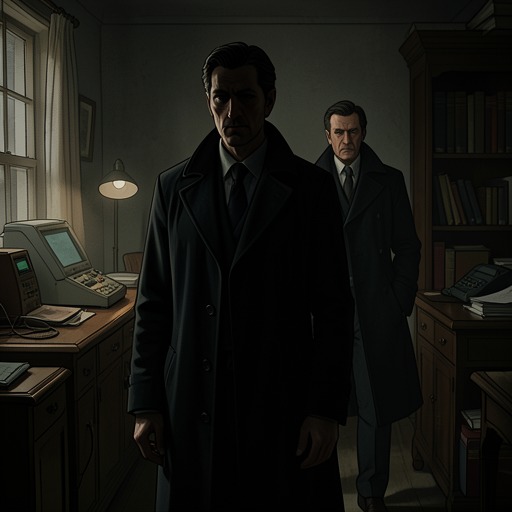
The first encounter also unsettles Henry’s expectations of the person he has hired. He reflects that people in Treble’s line of work are usually known through the results of their visits, while popular fiction supplies the faces imagined for them. Treble does not fit that imagined type. In the bathroom, after closing the tap, he asks whether they are still on; Henry chews his lip and says he does not know. Treble claps him on the shoulder before asking about cancellation. That ordinary gesture and the discussion of fees place the transaction in a mundane setting, in sharp contrast with what the arrangement would do to Celia Favreau.
Henry’s thoughts make the conflict more personal still. He associates Treble and code names with Celia Favreau and the divergent life she now represents to him: raising children, school admissions, and domestic routines rather than espionage and government secrets. He dismisses her as having gone off the deep end and regards his past investment in fantasies of her as wasted. Yet that contempt sits beside his recollection that he once chose to save her, a choice that continues to haunt him half a decade later. The authorization thus emerges from an unresolved history of attachment and judgment, not from indifference established by the scene.
The Decision
Later, Treble calls Henry by the code name Piccolo and reports that Celia Favreau is directly in front of him. She is walking very slowly, and Treble thinks she may be crying. He presents the situation as a fleeting opportunity: he does not know when another will arise, and says he can carry out the killing cleanly. The report converts the earlier, conditional arrangement into an immediate choice. Celia is no longer an abstract target in a negotiation over fees; Treble describes her as a person present in the street, moving slowly and visibly distressed.
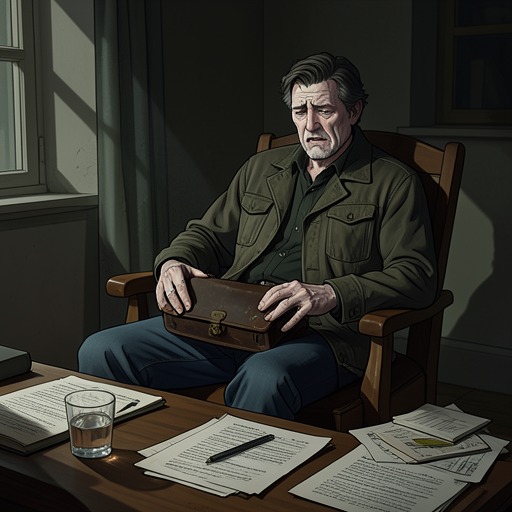
Henry’s response is constrained by his physical state. He sounds different, tries to listen for his heartbeat, and fails. After he identifies himself to Treble, he answers the report with a subdued acknowledgment, then receives the explicit choice of whether Treble should act now. Henry says that he understands before giving his final assent. The sequence matters: Treble supplies the location and opportunity, names the decision as Henry’s, and waits. Henry’s authorization is neither a detailed instruction nor an explanation of motive; it is a short response that removes the remaining barrier to action.
Significance and Limits
The earlier discussion of cancellation gives the later assent a transactional frame, but the phone call changes what that frame contains. Half a fee and travel expenses had made stopping imaginable; now Treble has found Celia Favreau and says the opportunity may not recur. Henry’s permission follows that narrowing of time. The contrast between a negotiable arrangement and an immediate human encounter makes the decision feel at once deliberate and compressed: Henry has not been shown deciding from scratch, yet the call makes him confront the action as imminent.
The scene also makes speech function as action. Henry does not describe what he wants to happen or offer a justification; his final word is understood by Treble as authorization. Its brevity does not make it less consequential. At the same time, the narration refuses to turn assent into proof of an outcome. Treble says he can act, and Henry permits him to do so, but this episode does not establish that Celia Favreau is killed. As Henry coughs and the restaurant lights seem to dim, the narration closes on his faltering perception rather than on Treble’s next move. The event’s ending therefore preserves both the gravity of Henry’s choice and the uncertainty of what follows.